Air-Cooled Heat Exchanger Checklist for High Ambient Cooling
Verify ambient temperature performance before buying an air-cooled heat exchanger. This checklist covers fan sizing, fin geometry, material selection, and documentation to ensure your system meets high ambient cooling requirements without overdesigning or underperforming.
- Verify fan power ratings against maximum ambient temperatures to prevent derating during hot seasons.
- Check fin density and tube materials for fouling resistance and pressure drop balance.
- Review manufacturer test data for performance at specific high ambient conditions, not just standard ratings.
- Confirm that control systems can modulate fan speed without causing hunting or instability.
- Request performance guarantees tied to site-specific ambient and load conditions.
Why Ambient Rating Determines System Success
An air-cooled heat exchanger performs differently than a water-cooled unit. The surrounding air is the cooling medium, and its temperature, density, and humidity directly affect heat transfer. During high ambient conditions, the same heat load requires more airflow or a larger surface area.
Procurement teams often specify units based on nameplate capacity at standard conditions, such as 30 or 35 degrees Celsius. This approach fails in hot climates. A unit rated for 100 kW at 35 degrees Celsius may deliver 80 kW at 45 degrees Celsius. The gap between these values is where system failures begin.
Before signing a purchase order, verify that the selected air-cooled heat exchanger meets your actual site conditions. The checklist below covers the technical and documentation items that protect your investment.
Verify Fan Power and Airflow at Peak Conditions
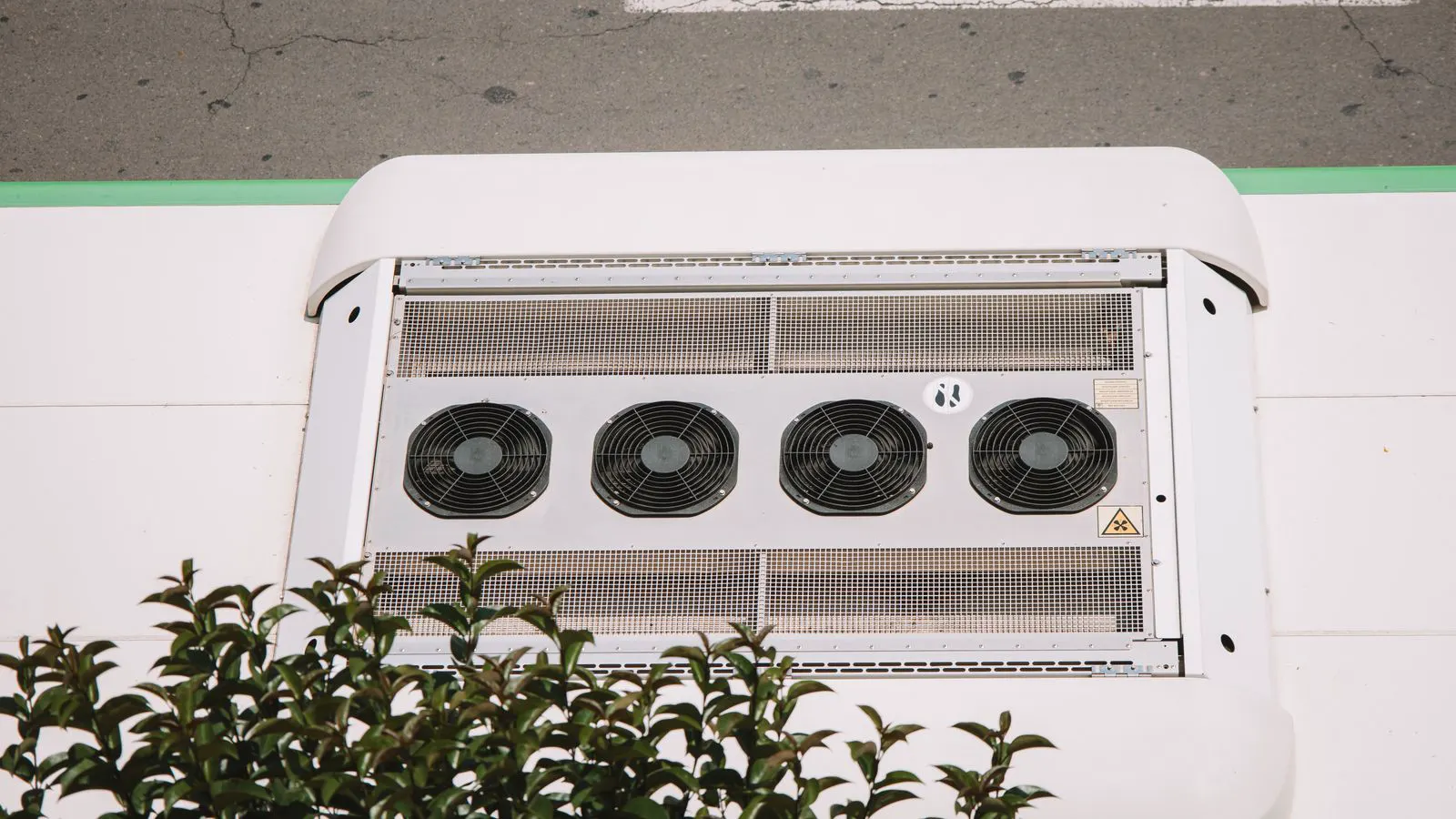
The fan is the heart of an air-cooled cooler. It moves air across the finned tubes. When ambient temperature rises, air density falls, reducing the mass flow rate for the same fan speed.
Check the fan motor rating. Confirm that it is sized for the highest expected ambient temperature. Some manufacturers derate fans in hot weather to protect bearings and motors. This reduces airflow and cooling capacity simultaneously.
Ask for the fan power curve across temperature ranges. A flat power curve is a red flag. You need a curve that shows acceptable performance degradation at peak temperatures.
Review the fan control method. VFDs are standard for variable speed operation. Ensure the control system can maintain stable airflow without hunting. Hunting causes vibration, noise, and uneven heat distribution across the tube bundle.
Red flags to watch for:
- Fan motors rated only for standard ambient conditions
- No documentation of derating curves
- Basic on/off control with no speed modulation
- Fan power exceeding 15 percent of total unit cost without justification
Examine Fin Geometry and Tube Materials
The fin-tube bundle is where heat transfer actually happens. Fin density, tube material, and surface treatment all affect performance and maintainability.
High fin density increases surface area but raises pressure drop. Low fin density reduces fouling risk but decreases cooling capacity. The balance depends on your application. Process cooling may tolerate higher pressure drop. Dirty or wet process fluids require wider fin spacing.
Check the tube material. Copper is standard for good thermal conductivity. Stainless steel resists corrosion. Aluminum is lightweight but vulnerable to certain chemicals. Match the tube material to your process fluid. A mismatch causes corrosion, leaks, and premature failure.
Review the fin material. Aluminum fins are common. They conduct heat well but corrode in certain environments. Anodized aluminum improves resistance. Ask about surface coatings if your process involves chlorides or ammonia.
Red flags to watch for:
- Fin spacing below 3 millimeters for wet or fouling-prone fluids
- Tube material not matched to process chemistry
- No documentation of fin material treatment
- Pressure drop data missing from technical datasheet
Review Performance Guarantees and Test Data
Manufacturer performance data is your primary reference. But most datasheets quote capacity at specific conditions. You need data at your actual operating point.
Request a performance table that shows heat transfer capacity across ambient temperatures. Look for at least three data points: standard, high, and maximum ambient. If the manufacturer only provides one rating, ask for engineering calculations.
Verify the basis of test. Was the unit tested in a wind tunnel? At the factory? Field data from similar installations is valuable but less reliable. Factory tests are the minimum standard.
Ask about performance guarantees. A standard warranty covers defects. A performance guarantee covers underperformance. If the unit fails to meet your specified capacity at your specified ambient temperature, you want a contractual remedy.
Red flags to watch for:
- Performance data only at one ambient temperature
- No written performance guarantee
- Test data not aligned with your process conditions
- Refusal to provide derating calculations
Confirm Pressure Drop and System Integration
Air-cooled heat exchangers have two pressure drops: air-side and process-side. The air-side drop is controlled by the fan. The process-side drop is controlled by the tube bundle design.
High air-side pressure drop means the fan works harder. This increases power consumption and noise. High process-side pressure drop means your pump or blower must work harder. Both affect operating costs and equipment life.
Check the air-side pressure drop at your design airflow. Compare it against the fan capability. There should be a match point where the fan curve and system resistance curve intersect. If the fan operates at a point too far from its best efficiency point, expect poor performance.
Review the process-side pressure drop. Calculate it against your available head. A rule of thumb is to keep process-side drop below 20 percent of your available head. This leaves room for filters, valves, and piping losses.
Red flags to watch for:
- No air-side pressure drop data provided
- Process-side drop exceeding 30 percent of available head
- Fan operating far from best efficiency point
- No information on fouling allowance in pressure drop calculations
Check Maintenance Access and Fouling Strategy
Air-cooled coolers collect dirt, dust, and debris on the fins. This fouling reduces heat transfer. The design must account for cleaning.
Review the fin spacing and tube layout. Tight bundles are harder to clean. Wider spacing allows brushes or compressed air to reach all surfaces. Check if the design allows tube removal. Some units have removable bundles. Others are welded and fixed.
Ask about the maintenance strategy. How often will you clean the fins? What method will you use? Compressed air is fast but can damage fins. Mechanical brushes are gentler but slower. The strategy must match the design.
Check for built-in features that aid maintenance. Drain pans for condensation. Access panels for internal inspection. Corrosion-resistant materials in wet zones. These details save time and cost during service.
Red flags to watch for:
- No access for fin cleaning
- No maintenance plan provided
- Materials not suitable for wet environments
- No drainage for condensation
Request Documentation and Site-Specific Validation
The final step is to gather all documents and validate them against your site conditions. You need a complete technical package before purchase.
Request the following documents:
- Performance curves at multiple ambient temperatures
- Fan power and airflow curves
- Pressure drop data for both air-side and process-side
- Material specifications for tubes, fins, and structure
- Maintenance and cleaning procedures
- Performance guarantee terms
Take these documents to your site engineer. Verify that the data matches your actual conditions. Ambient temperature is one factor. Wind speed, elevation, and humidity all affect performance. A unit that works in one location may fail in another.
Red flags to watch for:
- Missing performance curves
- No site-specific engineering review
- Documentation that does not match your process conditions
- Performance guarantee that excludes high ambient operation
Quick Reference Table: Critical Check Items
| Check Item | What to Verify | Red Flag |
|---|---|---|
| Fan Power Rating | Matched to peak ambient temperature | Derating not documented |
| Fin Geometry | Density matches process fluid needs | Too tight for fouling fluids |
| Tube Material | Compatible with process chemistry | Mismatched material |
| Performance Data | Multiple ambient temperature points | Single data point only |
| Pressure Drop | Air and process side within limits | Excessive fan or pump load |
| Maintenance Access | Fin cleaning feasible | No access panels |
| Performance Guarantee | Contractual capacity at your conditions | Standard warranty only |
Use this table as a quick audit tool. If any item shows a red flag, stop and ask for clarification before proceeding.
Frequently asked questions
How much capacity loss should I expect at high ambient temperatures?
Typical capacity loss ranges from 10 to 25 percent when moving from standard to high ambient conditions. The exact loss depends on your unit design, fan speed, and specific temperature range.
Can I use a standard air-cooled cooler in a hot climate?
Only if the standard rating already includes a derating margin for your peak temperatures. Most standard units are rated at 30 to 35 degrees Celsius. If your peak is 45 degrees or higher, you need a unit specifically rated for high ambient conditions.
What is the best way to verify manufacturer performance data?
Request test reports that show heat transfer capacity at your specific ambient temperature and load. Cross-check the data with independent engineering calculations. If the manufacturer cannot provide detailed test data, consider a pilot test or a unit with a proven track record in similar conditions.
How do I know if the fin spacing is correct for my application?
Match the fin spacing to your process fluid. Clean, dry fluids can handle tight spacing. Fouling or wet fluids need wider spacing. Ask the manufacturer for fin spacing recommendations based on your specific fluid properties.
Does elevation affect air-cooled cooler performance?
Yes. Higher elevation means lower air density, which reduces the mass flow rate for the same fan speed. This lowers cooling capacity. Ask the manufacturer for elevation derating curves if your site is above 500 meters.